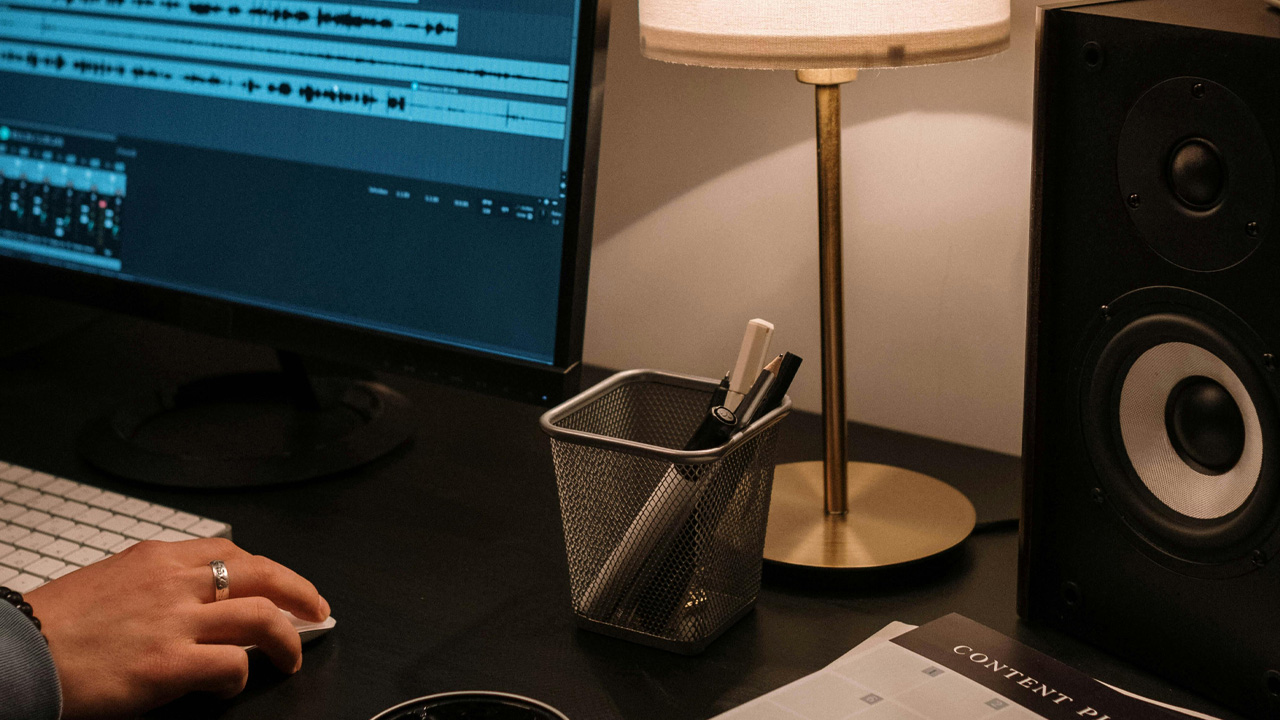
When it comes to setting up a home studio, one of the most important decisions is choosing the right pair of studio monitors. For bedroom producers, the choice often boils down to near-field vs. mid-field monitors. While both serve the same purpose—accurate audio reproduction—they cater to different environments and listening distances. In this article, we’ll break down the differences and help you decide which type is best for your setup.
Understanding Near-Field and Mid-Field Monitors
Near-Field Monitors
Near-field monitors are designed to be placed close to the listener, typically within 3 to 5 feet (1 to 1.5 meters). They are the most common choice for home studios and professional mixing environments due to their ability to deliver accurate sound without being overly affected by room acoustics.
- Best for: Small rooms, untreated spaces, close listening environments
- Typical size: 5” to 8” woofers
- Placement: Positioned on a desk or stands, forming an equilateral triangle with the listener
Why They Work Well in Bedrooms:
- Minimize reflections from walls and furniture due to the short listening distance
- Easier to set up and less demanding on room acoustics
- More affordable and space-efficient
Mid-Field Monitors
Mid-field monitors are designed for larger rooms and longer listening distances, typically between 6 to 10 feet (1.8 to 3 meters). These monitors usually feature larger drivers (often 8” and above) and a wider frequency response, especially in the low-end. Because they project sound over a greater distance, mid-field monitors require a properly treated room to avoid unwanted reflections and acoustic distortions.
- Best for: Larger studio spaces, treated rooms, professional applications
- Typical size: 8” to 12” woofers
- Placement: Positioned further back, often on stands or wall-mounted
Why They’re Less Practical for Bedroom Producers:
- Require a well-treated acoustic environment to avoid room reflections and phase issues
- Need more space to allow proper dispersion and listening distance
- Generally more expensive and power-hungry
Which One Should You Choose for a Bedroom Studio?
For most bedroom producers, near-field monitors are the clear winner due to their compact size, affordability, and ability to work well in untreated rooms. A good pair of 5” or 7” near-field monitors (such as the Yamaha HS5, KRK Rokit 5, or Adam Audio T7V) will offer a clear and honest sound without excessive bass buildup or room-related issues.
If your bedroom studio has proper acoustic treatment (bass traps, absorbers, and diffusers) and is large enough (at least 15-20 square meters), you could consider mid-field monitors for better bass response and a wider soundstage. However, this is rarely necessary for most home producers working in smaller spaces.
Final Thoughts
Unless you’re working in a well-treated, spacious studio, near-field monitors are the best choice for bedroom producers. They provide accurate sound, fit into small spaces, and don’t require extensive acoustic treatment. Invest in proper placement and basic room treatment (like foam panels and bass traps), and you’ll get the best possible mix translation from your setup.
tech enthusiasts are increasingly opting for studio monitors over traditional gaming speakers. The reason? More accurate sound reproduction, better stereo imaging, and a wider frequency response compared to typical gaming-oriented speakers. Whether for immersive open-world experiences, pinpoint-precise FPS audio cues, or cinematic storytelling, studio monitors offer a flat, uncolored sound that reveals details often masked by bass-heavy gaming speakers. So, if you’re a gamer looking to upgrade your setup with professional-grade audio, this guide can also help you decide between near-field and mid-field monitors based on your room size and listening preferences.